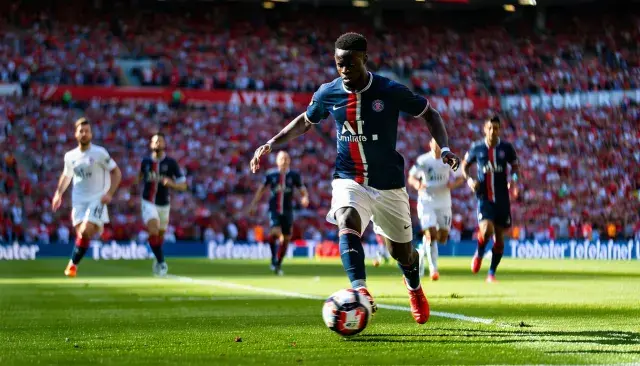

One of European football's most anticipated rematches takes place Wednesday, May 6, when Bayern Munich welcomes Paris Saint-Germain to the Allianz Arena for the second leg of their UEFA Champions League semifinal. Following a breathless 5-4 first encounter in Paris last week, both sides arrive in Munich knowing the winner will face Arsenal in the final at the Puskás Arena in Budapest on May 30. The stakes, the recent form, and the attacking ambitions of both clubs make this among the most compelling European fixtures in recent memory.
Context and Stakes: Why This Encounter Carries Such Weight
PSG's narrow advantage from the first leg means they enter the Allianz Arena with a technical edge, but away advantages in European competition are notoriously fragile, and Bayern's home record this season - bolstered by already having secured the 2025-26 Bundesliga title - signals a side with nothing to prove domestically and everything to gain on the continental stage. PSG, for their part, sit at the summit of Ligue 1, giving both clubs the rare distinction of arriving in a European semifinal as their respective domestic frontrunners.
Both sides have built their identities around high-tempo, forward-oriented football. That philosophical alignment is precisely what produced nine goals across ninety minutes in Paris, and Munich's famously vocal support at the Allianz Arena is expected to amplify pressure on the visiting side from the first whistle. The Puskás Arena in Budapest awaits the winner - a venue with a capacity of roughly 67,000 and a track record of hosting major UEFA occasions.
How and Where to Watch the Broadcast
Viewers across multiple regions have straightforward access to Wednesday's broadcast. In the United States, the fixture is available on CBS and Paramount+, with additional Spanish-language coverage on TUDN USA, Univision NOW, the TUDN App, and ViX. Cord-cutters can also access it through fuboTV, which carries live sports broadcasting as part of its base tier. UK viewers can find the fixture on TNT Sports 1, TNT Sports Ultimate, and HBO Max.
For those without an active subscription to any of these platforms, a free legal option exists - though it requires a brief technical workaround. Ireland's public broadcaster, RTÉ, is streaming the fixture without charge on RTÉ Player. The service is geo-restricted to Irish IP addresses, but it can be accessed from elsewhere using a virtual private network that routes your connection through an Irish server.
Accessing the Free Stream: A Step-by-Step Guide
Using a VPN to access region-locked public broadcasting is a widely used and generally accepted practice for viewers traveling abroad or residing outside a broadcaster's licensed territory. The process is straightforward:
- Subscribe to a reputable VPN service. ExpressVPN, which has received strong independent evaluations for its location-spoofing reliability, is a well-regarded option.
- Download and install the VPN application on your chosen device - desktop, mobile, or tablet.
- Open the application and connect to a server based in Ireland.
- Navigate to RTÉ Player in your browser or via its app and begin the free stream.
It is worth clarifying what a VPN does in this context: it masks your actual IP address and substitutes one from your chosen server location, making the broadcaster's geo-filtering read your connection as originating locally. Connection quality can vary depending on server distance and bandwidth, so connecting a few minutes before kickoff is advisable. ExpressVPN maintains server infrastructure in Ireland, which makes it a practical first choice for this specific use case.
What Comes Next: The Budapest Final
Arsenal have already secured their place in the Budapest final and will face whichever side prevails in Munich on Wednesday. The Puskás Arena, completed in 2019 and named after Hungarian football legend Ferenc Puskás, has established itself as one of UEFA's preferred venues for flagship occasions, combining modern infrastructure with a central European location that draws fans from across the continent. The final on May 30 represents the culmination of a UEFA Champions League cycle that has been defined, at the semifinal stage, by extraordinary attacking output and genuine uncertainty about outcomes - qualities that rarely diminish as the competition reaches its closing rounds.